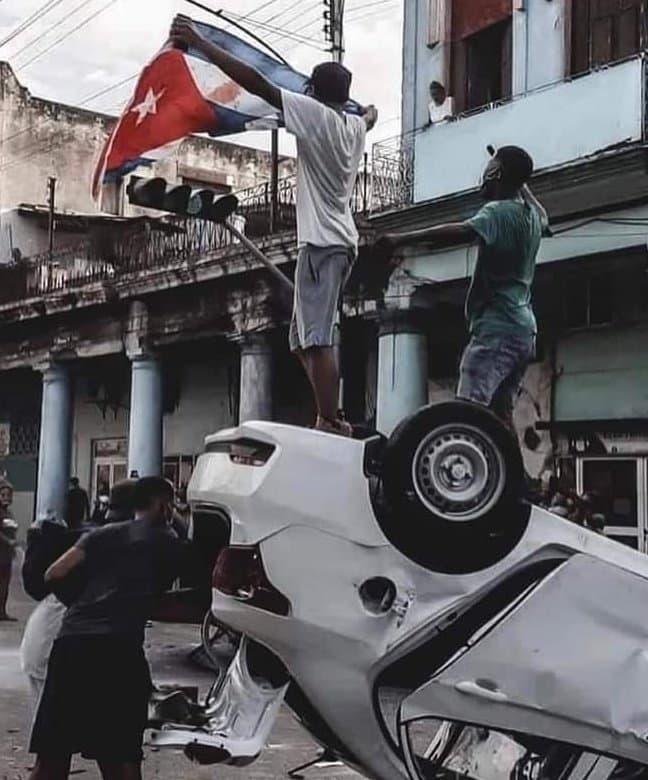
On July 11, 2021, demonstrations spread from San Antonio de los Baños to communities across Cuba. Participants called for freedom, expressed anger over living conditions, and challenged a political system built to prevent nationwide public dissent.
The events are easiest to understand as four connected chapters.
1. A country took to the streets
Videos from participants showed demonstrations across more than 90 reported locations. The geographic breadth distinguished July 11 from smaller, locally contained acts of dissent.
2. The government mobilized a response
President Miguel Díaz-Canel called supporters into the streets and state forces confronted demonstrators. Recordings documented beatings, arrests, and the deployment of police and specialized units.
Read about the government response →
3. Communications were restricted
Internet and platform restrictions made it harder for Cubans to organize, publish evidence, and locate family members. The state’s control over ETECSA gave it a powerful instrument for limiting visibility.
Read about the internet shutdown →
4. Arrests continued after the streets cleared
Families searched for missing relatives while activists tracked detentions and legal proceedings. Artists, journalists, students, political opponents, and ordinary participants were among those arrested.
Read the preserved detainee stories →
July 11 is history, but it is not finished history. Prison sentences, exile, censorship, and family separation continued long after the first videos disappeared from international headlines.